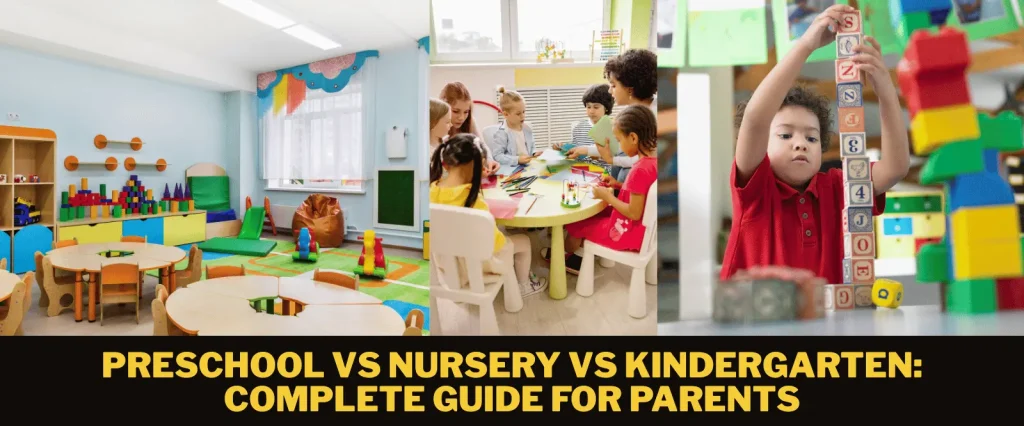
Preschool vs Nursery vs Kindergarten: Complete Guide for Parents
Preschool vs Nursery vs Kindergarten: Complete Guide for Parents Preschool vs Nursery vs Kindergarten: Complete Guide for Parents Choosing the right early education program for children is an important decision for every parent. Many guardians wonder which option among preschool, nursery, or kindergarten would be the best choice for their child. But many times these three terms are used interchangeably. In reality, the education and development of children at different levels happen at different stages. For parents exploring early learning options, Global Kids Pride focuses on helping children learn in a safe, caring, and activity-based environment. Understanding Preschool, Nursery School, and Kindergarten What is preschool? Preschool is early childhood education for children, which is specifically for children aged 2.5 to 4 years. The main objective of preschool is to teach children through play, introduce them to new things, and spark enthusiasm in them through various activities. In preschool, special attention is given to children’s language skills and building their self-confidence. The ability to work independently is developed in the child. In preschool, children are engaged in activities based on storytelling, music, art, and drawing, which awakens enthusiasm in them. What is a nursery school? Nursery school is specifically for children aged 3 to 4 years. It plays an important role in adapting children to a school environment. In nursery, children are introduced to numbers, words, letters, colors, and shapes. In nursery school, special attention is also given to the social education of children. Here, children learn to share food, live together, make friends with one another, and communicate with each other, which increases the child’s self-confidence. Many guardians are unable to distinguish between a preschool and a nursery school because their names are different; therefore, instead of focusing on the names, they should be influenced by the curriculum and the teaching methods. What is kindergarten? Kindergarten is the final stage before entering primary school, which is divided into two parts: LKG (Lower Kindergarten) and UKG (Upper Kindergarten). At this stage, children are completely prepared for school, where they are taught reading, writing, counting, full development of their language, and problem-solving. At this stage, the child’s ability to learn independently is fully developed. Preschool vs Nursery: What’s the Difference? Although the two programs share many similarities, there are some practical differences. Parents comparing preschool vs nursery should remember that both programs contribute to healthy child growth. The quality of the teaching and learning experience matters more than the label. Kindergarten vs Preschool: How Are They Different? The biggest difference between kindergarten and preschool lies in the purpose of teaching the children. In preschool, children are motivated to have a curiosity to learn about anything, use their imagination, and explore new things. In preschool, the teaching method is based on play and various activities. Whereas in kindergarten, the purpose of teaching children is to completely prepare them for school. At this stage, children are given a complete education in reading, writing, counting, and language skills so that they can prepare for further studies. Classroom Structure In preschool, children are taught through play; therefore, preschool classrooms are filled with play-based learning items. Whereas in kindergarten, children are taught through activities. Therefore, kindergarten classrooms should be attractive and interactive. Child Development Focus In both the preschool and kindergarten stages, special attention is given to child development. Children’s social development, emotional development, and physical development are promoted. However, in kindergarten, before children enter Class 1, more emphasis is placed on their concentration, self-confidence, and learning. Why Early Childhood Education Matters For children, it is their early education that makes their lives better. Early education teaches children for a lifetime. This education has an important contribution to their lives. Early education, when provided in a better way, helps children in the following ways: Development of listening and speaking skills in the child. Enhances creativity and their imagination. Teaches emotional control. Teaches how to live together in society. Develops problem-solving capability. Education given to children through activities increases their self-confidence. In the learning approach for children, play-based education, various activities, storytelling, music, art, drawing, etc., develop their skills and simultaneously encourage them to enjoy the process. How Parents Can Choose the Right Program Every child develops at their own pace. Instead of choosing a school based solely on the child’s age, parents should consider whether their child is emotionally and socially ready to go to school. Checklist for Parents Before Enrollment (Ask Yourself These Questions): Is my child capable of staying away from home? Are the teachers trained to provide early childhood education? Will my child be able to maintain a balance between the curriculum and play? Will the classroom activities be prepared for child development? Will the school be able to encourage parental partnership? Before making the final decision for their child, parents should talk to the school teachers and gather information by personally observing the classroom activities. Common Mistakes Parents Should Avoid Most parents think that putting pressure on a child’s early education yields better results. However, children learn best only when they feel emotionally secure, curious, and active. Avoid education for children that is solely based on worksheets or rote learning (memorization). Choose a school for the child that maintains a balance between structured education, creativity, physical activity, sports, and interaction. Frequently Asked Questions 1. What is the main difference between preschool and nursery? Preschool specifically focuses on the overall development of early childhood education for children. On the other hand, nursery school familiarizes children with a daily routine and basic habits before they go to kindergarten. 2. Is kindergarten mandatory before primary school? Kindergarten is important before primary school because kindergarten prepares children for school and develops basic academic skills in them. 3. What is the right age to start preschool? Most children start going to preschool between the ages of 2.5 to 3 years, based on their emotional development. 4. Which one is better: preschool or nursery? Preschool and nursery are both not universally better for every child. Making the right